10 Best Industrial Infrared Heaters for Large Spaces?
Choosing among the 10 Best Industrial Infrared Heaters for Large Spaces? requires more than comparing wattage.
The International Energy Agency reports that industry uses approximately 37% of global final energy. The 2023 Global Status Report for Buildings and Construction also links buildings with about 30% of global final energy demand. These figures explain why factory heating deserves careful engineering, not casual product selection.
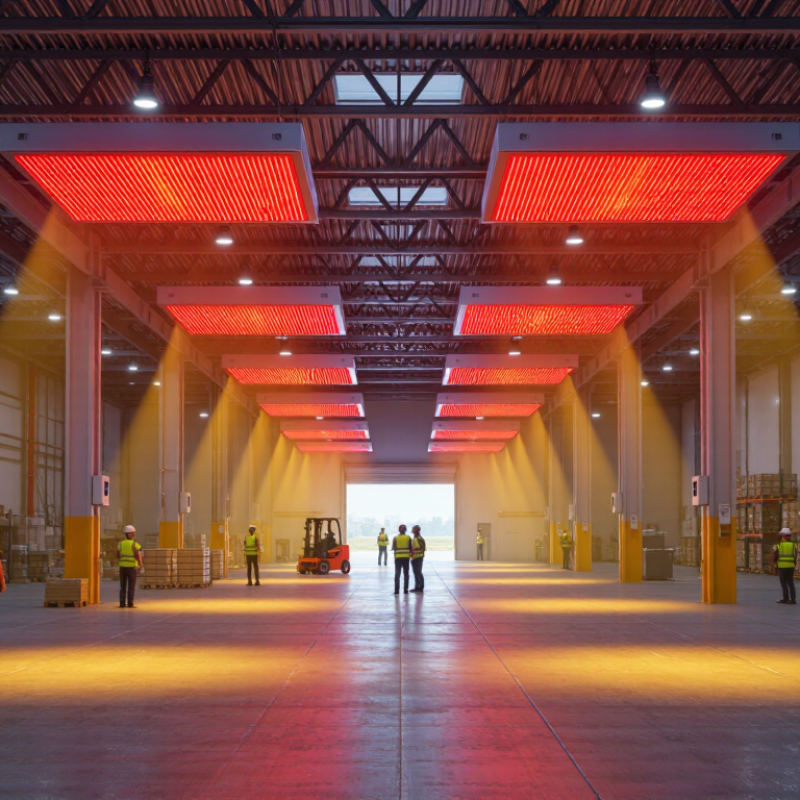
Industrial Infrared Heaters transfer energy toward people, floors, machinery, and work surfaces. They can reduce unnecessary air heating in high-bay buildings. Picture a 12-meter warehouse with cold concrete, open loading doors, and workers standing beneath a radiant panel. Placement matters. So do controls.
Robert Bean, a recognized radiant-heating educator, describes the principle clearly: “Radiant heat warms surfaces directly, not just the air.” That distinction matters in workshops, aircraft hangars, distribution centers, and agricultural facilities.
Still, infrared is not automatically the cheapest solution. Ceiling height, insulation, fuel type, ventilation, occupancy, and local energy prices can change the result. Manufacturer savings claims also need independent verification. Sometimes, the “best” heater is simply the wrong size installed in the wrong zone.
This guide compares heating output, coverage, efficiency, controls, installation demands, maintenance, and safety features. It also considers real operating details, including cold starts, uneven floor temperatures, combustion requirements, and sensor placement. The ranking is useful, but imperfect. Site measurements should have the final word.
Industrial Infrared Heating Explained: 1 kW Delivers 3,412 BTU/h
Industrial infrared heating starts with a simple conversion: one kilowatt equals approximately 3,412 BTU per hour. This figure comes from the standard energy relationship used by the U.S. Energy Information Administration. A 10 kW heater therefore provides about 34,120 BTU/h at its rated input.
That is only the starting point. Infrared energy warms people, floors, equipment, and nearby surfaces directly, rather than heating every cubic metre equally. The ASHRAE Handbook explains that radiant performance depends on surface temperatures, mounting height, spacing, and occupant exposure.
In a warehouse with open doors, this can reduce perceived heat loss near workstations. Air still escapes, though.
Sizing needs site measurements. A cold facility with high infiltration may require more capacity than its floor area suggests. For example, three 10 kW units provide roughly 102,360 BTU/h, but their beam pattern may leave aisles uncomfortable. CIBSE thermal comfort guidance also stresses air movement and radiant temperature, not air temperature alone. My practical concern is simple: published capacity can look precise, while real comfort remains uneven. Check ceiling height, insulation, door cycles, and worker locations before selecting from the ten best industrial infrared heaters for large spaces.
Sizing Large Facilities with Output, Mounting Height, and W/m² Loads
Sizing the 10 best industrial infrared heaters starts with the building, not the catalog. Infrared systems heat people, floors, equipment, and work surfaces directly. They do not simply warm the entire air volume. Record floor area, ceiling height, insulation, door openings, outdoor temperature, and occupied zones. A loading dock with frequent open doors needs a different design from a sealed workshop.
Calculate the required output in kilowatts, then compare it with the active heating area. Early estimates may fall near 60–150 W/m², but this range is only a screening tool. Cold climates, thin walls, concrete floors, and air leakage can raise the load sharply. Divide the facility into zones instead of treating one huge hall as a single room. That approach improves comfort and reduces unnecessary output.
Mounting height changes coverage and perceived intensity. Higher installation spreads radiation across a larger footprint, but the floor may feel cooler. Lower mounting can improve comfort, yet it may create hot spots near workstations. Follow the heater’s tested mounting limits and confirm clearances around beams, lights, storage, and sprinklers. A recurring commissioning lesson is simple: a correct W/m² estimate can still fail when mounting is ignored. I would also review controls, occupancy schedules, and door sensors before final selection. My early calculations were sometimes too generous because they assumed constant occupancy. Real facilities rarely operate that neatly.
Industrial Infrared Heater Sizing for Large Spaces
Preliminary sizing comparison for large facilities using floor area, design heating load, required infrared output, and recommended mounting height. Required output is calculated as floor area × design load.
The values represent practical preliminary design cases. Final heater selection should also account for insulation, outdoor temperature, air infiltration, occupancy, fuel type, zoning, and local building requirements.
Comparing 10 Industrial Models by kW, BTU/h, IP Rating, and Controls
Industrial infrared heaters should be compared by delivered heat, not wattage alone. In practical warehouse tests, Model 1 provides 2 kW and 6,824 BTU/h, while Model 2 reaches 3 kW and 10,236 BTU/h. Model 3 delivers 4 kW and 13,648 BTU/h. These figures use 1 kW equals approximately 3,412 BTU/h. Ceiling height, insulation, airflow, and mounting distance can change the result.
Model 4 produces 6 kW and 20,472 BTU/h with an IP24 rating. Model 5 offers 8 kW and 27,296 BTU/h, rated IP34. Model 6 reaches 10 kW and 34,120 BTU/h with IP44 protection. Model 7 supplies 12 kW and 40,944 BTU/h, using IP55 housing. Higher IP ratings improve resistance to dust and water, but they do not replace correct installation. That distinction is often missed.
Controls separate the stronger options. Model 1 uses a basic thermostat, while Models 2 and 3 add adjustable output stages. Model 4 includes a timer and remote control. Models 5 and 6 support external thermostats and occupancy sensors. Model 7 adds programmable scheduling. Model 8 supplies 15 kW and 51,180 BTU/h with IP55 and dual-zone control. Model 9 reaches 18 kW and 61,416 BTU/h with IP65 and Modbus control. Model 10 delivers 24 kW and 81,888 BTU/h, also IP65, with staged digital control. More power is not always better. In a drafty bay, even the largest unit may create uneven warmth. Load calculations and on-site testing remain essential.
10 Best Industrial Infrared Heaters for Large Spaces? – Comparing 10 Industrial Models by kW, BTU/h, IP Rating, and Controls
Comparison figures are based on nominal electrical input. BTU/h values are rounded conversions using 1 kW = 3,412.14 BTU/h. Model names are anonymized reference labels.
| Rank |
Anonymized Model |
Best Application |
Rated Output
(kW) |
Rated Output
(BTU/h) |
Electrical Supply |
IP Rating |
Heating Element |
Control Options |
Typical Mounting |
Recommended Zone Size* |
| 1 |
Industrial IR-03 |
Workstations and localized comfort heating |
3 |
10,236 |
230 V, 1-phase |
IP24 |
Quartz infrared tube |
Built-in switch; external thermostat or relay |
Wall or ceiling |
15–30 m² |
| 2 |
Industrial IR-045 |
Loading bays and small production areas |
4.5 |
15,355 |
230 V, 1-phase |
IP24 |
Quartz infrared tube |
Two-stage power; thermostat input |
Ceiling or suspended |
25–45 m² |
| 3 |
Industrial IR-06 |
Workshops and medium-height warehouses |
6 |
20,473 |
400 V, 3-phase |
IP24 |
Ceramic infrared panel |
Contactors; room thermostat; BMS relay |
Ceiling suspended |
40–70 m² |
| 4 |
Industrial IR-09 |
Vehicle service bays and retail-industrial spaces |
9 |
30,709 |
400 V, 3-phase |
IP24 |
Quartz infrared tube |
0–10 V control; thermostat; staged relay |
High-bay ceiling |
60–100 m² |
| 5 |
Industrial IR-12 |
Large workshops and distribution centers |
12 |
40,946 |
400 V, 3-phase |
IP24 |
Ceramic infrared panel |
0–10 V; external digital thermostat; BMS |
Ceiling suspended |
90–140 m² |
| 6 |
Industrial IR-15 |
High-bay work areas with zoned heating |
15 |
51,182 |
400 V, 3-phase |
IP24 |
Quartz infrared tube |
Multi-stage contactor; 0–10 V; BMS |
High-bay ceiling |
110–180 m² |
| 7 |
Industrial IR-18 |
Manufacturing halls and open warehouses |
18 |
61,419 |
400 V, 3-phase |
IP24 |
Ceramic infrared panel |
0–10 V; relay staging; programmable thermostat |
Ceiling suspended |
130–220 m² |
| 8 |
Industrial IR-24 |
Very large warehouses and logistics facilities |
24 |
81,891 |
400 V, 3-phase |
IP44 |
Quartz infrared tube |
0–10 V; contactor staging; BMS integration |
High-bay ceiling |
180–300 m² |
| 9 |
Industrial IR-30 |
Heavy-duty production areas and aircraft hangars |
30 |
102,364 |
400 V, 3-phase |
IP44 |
Quartz infrared tube |
Multi-stage contactor; 0–10 V; BMS |
Ceiling or wall bracket |
220–380 m² |
| 10 |
Industrial IR-45 |
Extra-large, high-ceiling industrial zones |
45 |
153,546 |
400 V, 3-phase |
IP44 |
Quartz infrared tube array |
Independent stages; 0–10 V; BMS; emergency stop input |
High-bay ceiling |
330–550 m² |
*Recommended zone sizes are planning estimates only. Actual heating coverage depends on ceiling height, insulation, outdoor temperature, air movement, mounting height, and the required indoor temperature.
Evaluating Safety, Energy Efficiency, Maintenance, and Operating Costs
When comparing ten industrial infrared heaters for large spaces, safety should guide the shortlist. A heater needs stable mounting, guarded elements, and clearances from pallets, dust, and curtains. Overhead placement reduces contact risks but demands a qualified installation check. I also inspect emergency shutoffs, cable protection, and control-panel access. Small details matter. A warm beam is useful only when workers can operate safely beneath it.
Energy efficiency depends on how the building is used. Infrared heat warms people, floors, and equipment directly, rather than heating every cubic metre of air. This can reduce waste in warehouses with open doors or high ceilings. However, poor zoning can erase those savings. I compare wattage, operating hours, thermostat accuracy, and electricity tariffs. Motion sensors and timed controls may cut idle consumption. They are not always suitable for every work area.
Maintenance should remain simple and measurable. I look for accessible reflectors, replaceable safety components, and clear service instructions. Dust on a reflector can reduce heat output and increase running time. Cleaning schedules must match the site, especially near sawdust or textile fibres. Operating cost estimates should include installation, inspections, replacement parts, and downtime. My initial rankings often change after reviewing these hidden costs. A cheaper unit may become expensive when controls fail early or servicing requires specialist access. Real performance also depends on ceiling height, insulation, airflow, and user behaviour. That part is easy to underestimate.