Why Choose Mica Insulated Band Heaters for Your Industrial Applications?
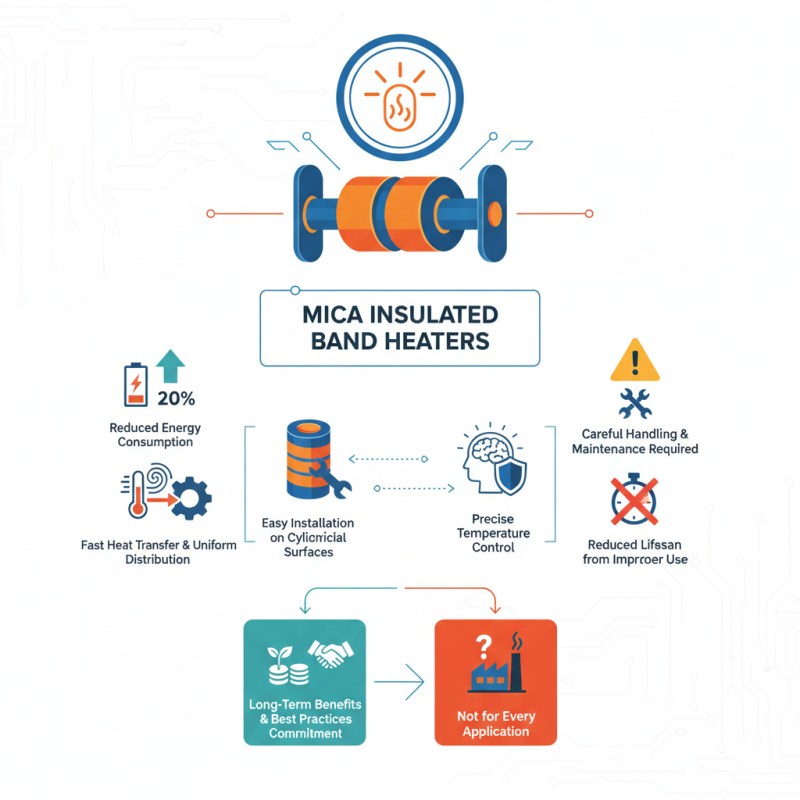
In today's industrial landscape, efficient heating solutions are crucial. Mica Insulated Band Heaters have emerged as a popular choice. They offer reliability and performance across various applications. According to a recent industry report, these heaters can reduce energy consumption by up to 20%. This is significant for manufacturers aiming to optimize costs.
Mica Insulated Band Heaters provide fast heat transfer and uniform temperature distribution. Their design allows easy installation on cylindrical surfaces, making them versatile. However, they require careful handling and maintenance. While they are durable, improper use can lead to reduced lifespan. Understanding this balance is vital for users.
In many sectors, the demand for precise temperature control is rising. Mica Insulated Band Heaters meet this need effectively. Yet, some might underestimate their importance or potential risks. Investing in quality heaters could yield long-term benefits, but it requires commitment to best practices. That said, not every application may justify their use. Reflecting on these aspects can guide better decisions.
Benefits of Mica Insulated Band Heaters in Industrial Settings
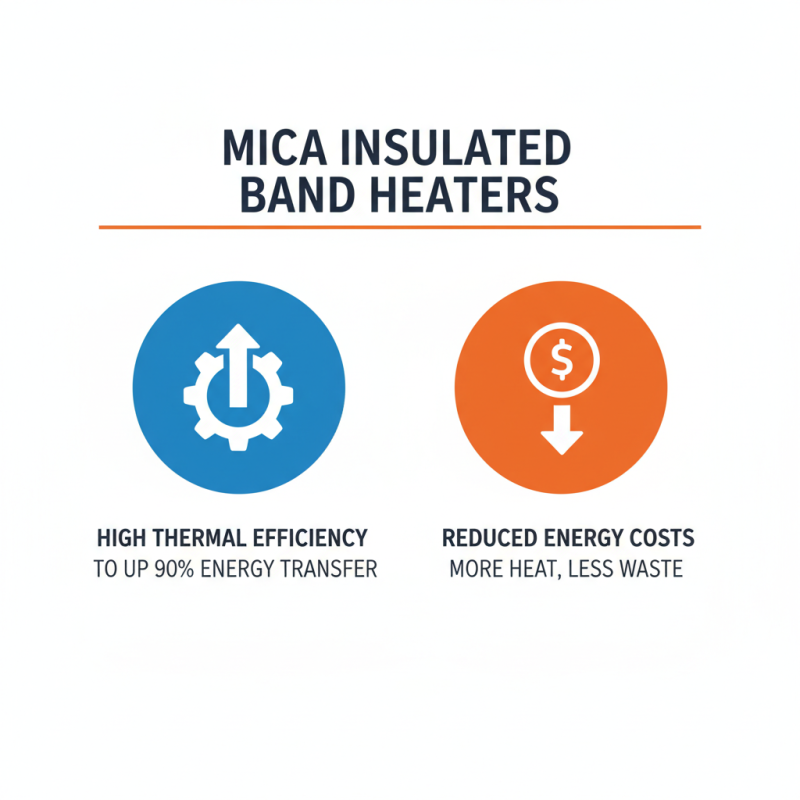
Mica insulated band heaters have gained traction in industrial applications due to their unique advantages. One key benefit is their high thermal efficiency. According to a recent industry report, these heaters can provide up to 90% efficiency in energy transfer. This means more heat reaches the target surface, reducing energy costs.
Another significant advantage is their versatility. Mica insulated band heaters can be used on various equipment, including drums, pipes, and vessels. This flexibility supports different manufacturing processes. However, it's worth noting that while they are effective, improper installation can lead to inefficiencies. Regular maintenance is crucial to ensure optimal performance and longevity.
Safety is a priority in industrial settings. Mica insulation minimizes the risk of overheating and fire hazards. However, if a heater is not monitored, temperatures can spike unexpectedly. Such outcomes underscore the need for routine checks. Industry data suggests that approximately 15% of equipment failures stem from overheating issues. Therefore, using mica insulated heaters requires diligence.
Thermal Efficiency: Analyzing Temperature Control and Power Consumption
Mica insulated band heaters are becoming essential in many industrial settings. They offer impressive thermal efficiency, making them suitable for various applications. These heaters provide precise temperature control, crucial for processes that require consistency. The design creates a uniform heat distribution, minimizing hot spots. This feature significantly reduces the energy wasted in the heating process.
Power consumption is also a significant factor in choosing these heaters. They can reach optimal temperatures quickly, which helps in reducing energy costs. However, users should monitor energy use regularly. Some may find that improper installation negates the benefits of efficiency. Ensuring proper fit and contact is vital.
Temperature fluctuations can still occur if not monitored closely. This leads to inefficient operations and potential product quality issues. Regular maintenance and checks can help avoid these pitfalls. Investing time in maintenance is often overlooked. Users should address these challenges to truly appreciate the benefits of mica insulated band heaters.
Durability and Lifespan: Industry Standards for Mica Insulated Heaters
Mica insulated band heaters are increasingly popular in industrial settings due to their durability and extended lifespan. These heaters can withstand high temperatures, making them suitable for various applications. Unlike some alternatives, mica heaters are designed to resist cracking and wear over time. This resilience is critical for industries that rely on consistent heating for production.
Durability often hinges on proper installation and maintenance. While mica heaters are robust, improper handling can lead to issues. Regular inspections can help identify wear before it becomes a problem. Moreover, ensuring that the heaters are properly fitted minimizes the risk of damage and enhances performance. Nonetheless, users must remember that even the most durable heaters require attention.
The lifespan of mica insulated heaters can be impressive, often reaching several years when maintained correctly. However, this varies based on usage and environmental factors. Factors like temperature fluctuations and mechanical stress can shorten their life. Therefore, understanding specific operational conditions is crucial for maximizing durability. By taking these considerations into account, industries can make informed decisions about their heating solutions.
Comparison of Durability and Lifespan of Mica Insulated Heaters
This chart compares the performance metrics of Mica Insulated Heaters with Conventional Heaters in terms of temperature stability, operating hours, maintenance frequency, heat distribution, and energy efficiency.
Applications: Key Industries Utilizing Mica Insulated Band Heaters
Mica insulated band heaters are essential in various industries. These heaters perform well in high-temperature applications. Key sectors include plastics, food processing, and packaging. Their ability to provide uniform heating is crucial. In the plastics industry, for example, they aid in maintaining the right temperature for melting point specifications. Data shows that up to 75% of plastic manufacturing utilizes some form of heating technology.
The food processing industry also benefits significantly. Mica heaters assist in precise temperature control during cooking or melting processes. In many cases, temperature consistency can affect product quality. A report indicates that nearly 60% of food manufacturers rely on these heaters for efficient production. Moreover, they are crucial in packaging—ensuring that materials seal properly. A failure in this aspect can lead to significant product waste.
Though highly effective, there are concerns. Mica heaters lack moisture resistance. If not monitored, they may degrade faster in humid environments. Regular maintenance is necessary to avoid unexpected failures. Overall, while these heaters play a pivotal role across industries, continuous evaluation is essential to maximize their benefits. They should be part of a broader heating strategy.
Cost-Effectiveness: Evaluating Long-Term Savings and Investment Returns
Mica insulated band heaters are gaining popularity in various industrial settings. One of the main reasons is cost-effectiveness. According to industry reports, these heaters can reduce energy consumption by up to 25%. Lowered energy bills lead to significant long-term savings. Investing in mica insulated band heaters can yield a return on investment in less than two years.
Operating efficiency is another crucial aspect. Mica heaters heat up quickly and maintain a stable temperature, which minimizes processing time. A study by the Energy Efficiency Partnership states that improving thermal efficiency can enhance productivity by up to 15%. Additionally, reduced downtime from equipment failures correlates with increased profitability in manufacturing sectors.
**Tip:** Regularly inspect your heaters to ensure optimal performance. Minor issues can lead to inefficiencies. Assess your energy bill monthly to gauge savings from your heating systems.
Cost savings also come from replacement frequency. Mica band heaters typically last longer than traditional options. This reduces the frequency of replacements and associated labor costs. However, proper maintenance is essential. Ignoring maintenance can shorten service life and erode savings.
**Tip:** Document heater performance and maintenance to predict future needs accurately. Tracking trends can help you plan better.
Why Choose Mica Insulated Band Heaters for Your Industrial Applications? - Cost-Effectiveness: Evaluating Long-Term Savings and Investment Returns
| Application |
Mica Insulated Band Heater Cost (USD) |
Conventional Heater Cost (USD) |
Energy Savings Over 5 Years (USD) |
Return on Investment (%) |
| Plastic Extrusion |
300 |
450 |
500 |
50% |
| Food Processing |
350 |
500 |
600 |
60% |
| Textile Industry |
320 |
480 |
550 |
57% |
| Chemical Processing |
400 |
600 |
720 |
63% |
| Metal Processing |
350 |
550 |
580 |
53% |