How to Choose the Right Heater Bar for Your Needs?
Choosing the right Heater Bar can be challenging, but it is crucial for your specific needs. Heater Bars are widely used in various industries, from manufacturing to research labs. Their applications include heating materials evenly and maintaining optimal temperatures.
Understanding your requirements is vital. Consider the size, wattage, and thermal properties of the Heater Bar. Each type serves different functions. For example, some Heater Bars can provide focused heat, while others distribute warmth across a larger area. Think about the power source that suits your setup.
Reflect on your choices carefully. Some Heater Bars may not perform well under certain conditions. Research and consult experts in the field. Ensure the Heater Bar you select aligns with your project’s demands. A thoughtful choice can lead to better efficiency and safety in your operations.
Understanding Different Types of Heater Bars Available
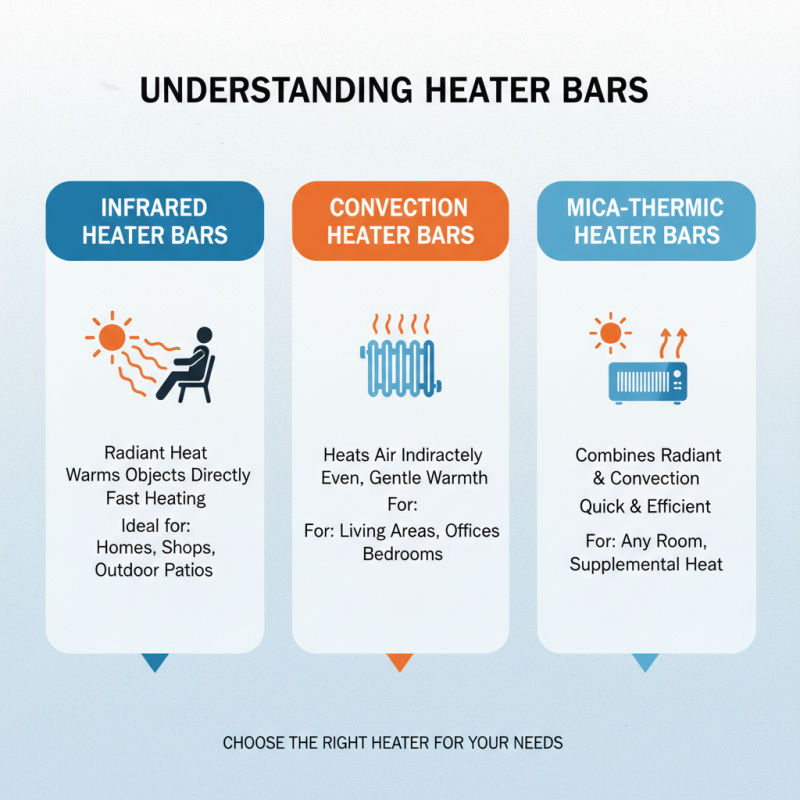
When choosing a heater bar, understanding the varieties available is crucial. There are several types, each serving different purposes. Infrared heater bars use radiant heat, warming objects directly instead of the air. This makes them ideal for spaces that require fast heating. They work well in homes, shops, and even in outdoor settings.
There are also ceramic heater bars. These are known for their even distribution of heat. They are energy-efficient and often used in smaller spaces. However, their performance can vary based on the design and placement. Evaluating the heat output and energy usage is essential to make a wise decision. These details can impact comfort and costs.
Electric heater bars are another option. They are easy to install and come with various features. A downside is that they may lead to increased electricity bills, depending on usage. Always consider the environment where a heater bar will be placed. Poor placement can diminish efficiency significantly. Adjusting locations after installation may become necessary, and this could affect your experience.
Assessing the Heating Needs of Your Space
When assessing the heating needs of your space, it’s crucial to consider the size and insulation of the area. According to the U.S. Department of Energy, you need about 20 BTUs per square foot in well-insulated rooms. This metric helps determine the power of the heater bar you should choose. A small room, like a 200 square foot space, could require a heater that delivers roughly 4,000 BTUs. Lack of proper heating can lead to discomfort and increased energy costs.
Another consideration is the height of your ceilings. Higher ceilings require more heating power. Many overlook this factor, assuming standard calculations for space are sufficient. Also, how many windows and their orientation matter. Areas with large windows lose heat quickly. A study from Energy Star notes that drafty windows can lead to a 25% increase in heating costs. This often neglected detail can significantly impact your heating needs.
Finally, think about how you use the space. A room that’s used infrequently may not need constant heating. Balancing occasional heat with appropriate power helps maintain comfort without overspending. Identifying your unique needs can save money and enhance your experience. Avoiding these considerations can lead to the choice of an underpowered or overly powerful heater bar, resulting in wasted resources.
Comparison of Heater Types for Different Space Sizes
This chart illustrates the required heater output in BTU/hr for small, medium, and large rooms, helping you assess the appropriate heater bar for your specific space needs.
Key Features to Consider When Selecting a Heater Bar
When selecting a heater bar, it’s crucial to focus on key features that meet your specific needs. One essential factor is the wattage. A higher wattage can provide faster heating, but it may not always be the most efficient option. Energy efficiency is vital, especially with recent studies showing that heating costs can account for nearly 42% of total energy expenses in a household.
Material is another important consideration. Heater bars are typically made of aluminum, stainless steel, or ceramic. Each material has unique thermal properties. For example, aluminum heats up quicker but may not retain heat as long as ceramic options. Understanding these differences can help you make an informed choice.
Tips: Look for heater bars with adjustable settings. They can save energy and suit varying heating demands. Inspect the safety features too. Overheating protection and automatic shut-off mechanisms can prevent accidents at home.
Lastly, consider the size and shape of the heater bar. A larger unit may provide more even heating, while a compact design can fit smaller spaces. Customization to your space is crucial. Always check reviews or seek expert advice when uncertain.
Evaluating Energy Efficiency and Safety Ratings
When selecting the right heater bar, energy efficiency and safety ratings are crucial. These factors help ensure that your heater operates effectively while minimizing risks. High energy efficiency not only saves you money but also reduces your carbon footprint. Look for models with Energy Star ratings, which indicate superior performance in energy use.
Safety ratings are equally important. Heaters can pose risks like overheating or electrical issues. Before purchasing, examine the safety certifications on each model. A heater with an automatic shut-off feature can provide added peace of mind. Always consider the location where the heater will be used.
Tips for choosing the right heater include checking user reviews for insights on performance. Real-world feedback often reveals practical issues that specs alone cannot. Look for models with clear instructions and troubleshooting guides. A product that is easy to use is often more reliable in the long run. Don't forget to periodically reassess your heater's efficiency and safety features. Regular checks can prevent potential hazards.
How to Choose the Right Heater Bar for Your Needs? - Evaluating Energy Efficiency and Safety Ratings
| Heater Bar Type |
Energy Efficiency Rating |
Safety Rating |
Average Price ($) |
| Ceramic Heater Bar |
A++ |
UL Listed |
85 |
| Infrared Heater Bar |
A+ |
ETL Certified |
120 |
| Radiant Heater Bar |
B |
CSA Approved |
75 |
| Convection Heater Bar |
A |
Intertek Tested |
95 |
| Oil-filled Heater Bar |
A |
RoHS Compliant |
110 |
Maintenance Tips for Optimal Heater Bar Performance
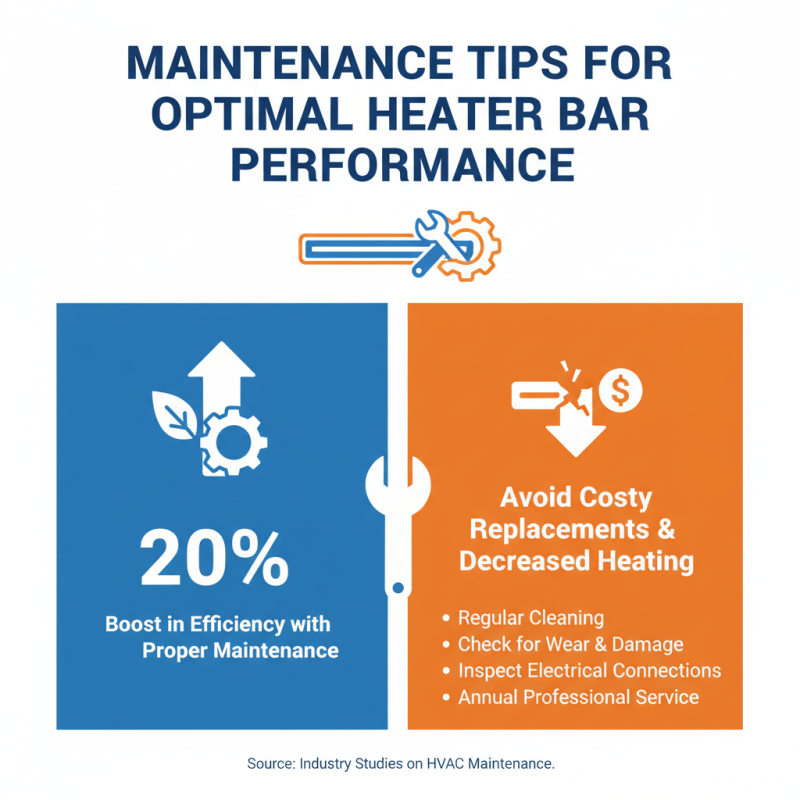
When it comes to heater bars, regular maintenance is key to optimal performance. Studies show that properly maintained heater bars can boost efficiency by up to 20%. Neglecting maintenance, on the other hand, can lead to costly replacements and decreased heating effectiveness.
Cleaning heater bars is crucial. Dust and grime can significantly impair heat output. Experts recommend inspecting and cleaning the heater bar at least once every three months. Use a soft, damp cloth to wipe down the surface. This simple step can prolong the life of the heater bar. Additionally, ensure that any wiring is intact and free from damage. Over 30% of heater inefficiencies are linked to electrical issues.
Adjusting the thermostat settings can also improve performance. Many users find that optimal efficiency occurs at lower settings than expected. Moreover, consider the location of the heater bar. It should be placed in an area with good airflow to avoid hot spots and ensure even heat distribution. By being attentive to these details, users can maximize their heater bar's lifespan and functionality.