How to Choose the Right Heater Pipes for Your Needs?
Choosing the right heater pipes can significantly impact your heating efficiency and comfort. It’s crucial to understand the various options available. Heater pipes serve as a conduit for transferring heat throughout your space. Their material, size, and design all influence performance and energy consumption.
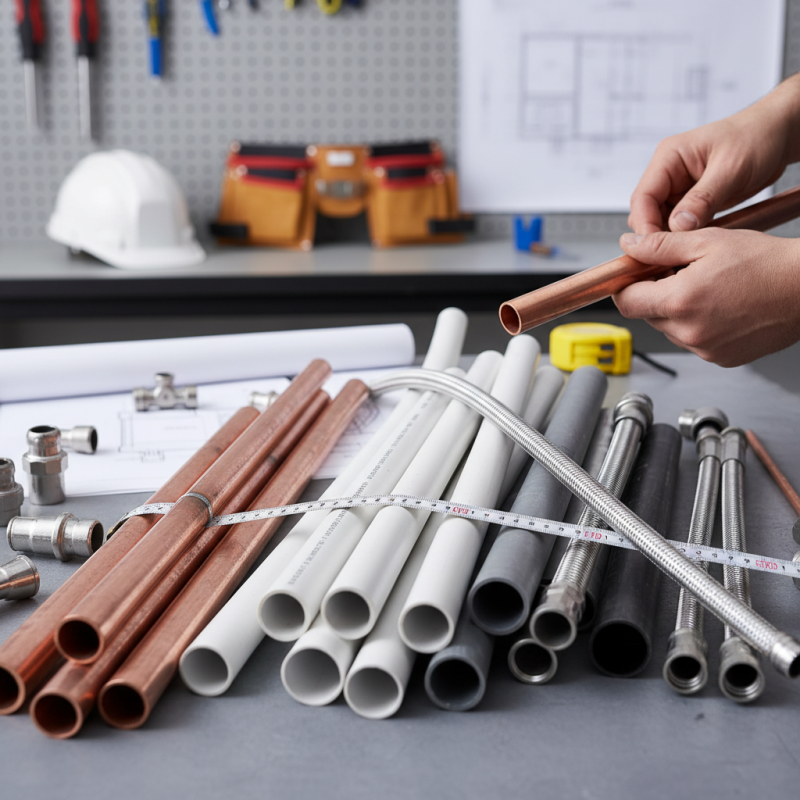
Inadequate choices may lead to heat loss or inefficient heating. Copper pipes are known for their durability; however, they may not be the most cost-effective option. On the other hand, PVC pipes are lighter and easier to handle but might not withstand high temperatures. Balancing cost and performance becomes essential in selecting the right heater pipes.
Proper installation also plays a vital role. Even the best pipes can underperform if not installed correctly. Consider consulting professionals to ensure optimal setup. Reflecting on these factors ensures your choice matches both your needs and budget.
Understanding Different Types of Heater Pipes and Their Applications
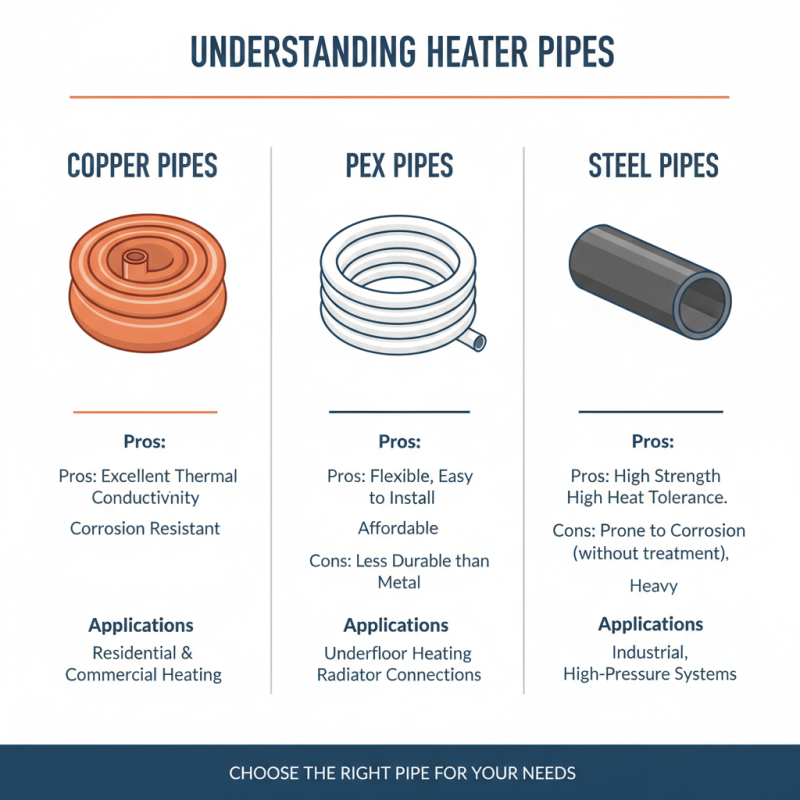
Choosing the right heater pipes begins with understanding the types available. Each type serves a specific purpose. Copper pipes offer excellent thermal conductivity. They resist corrosion but can be expensive. PEX pipes are flexible and easy to install. They are affordable, though less durable than metal options.
Stainless steel pipes are another choice, known for their longevity. They handle high temperatures well. However, they can be heavy and harder to work with. Cast iron pipes are robust and ideal for high-efficiency systems. Their weight is both an advantage and a drawback.
Consider your needs carefully. Cheaper options may save money upfront but may cost more over time due to repairs or replacements. The right material should fit your system and your budget. Reflect on past projects. What worked? What didn’t? Learning from experience is vital in making informed decisions.
Evaluating Material Composition: Copper, PEX, and PVC in Heater Pipes
When considering heater pipes, material composition plays a crucial role. Copper, PEX, and PVC are three popular choices. Each offers unique advantages and limitations. Copper is known for its durability and heat transfer efficiency. However, it can be expensive and may require special tools for installation.
PEX, or cross-linked polyethylene, is flexible and resistant to scale and chlorine. It is also lightweight, making installation easier. Yet, some concerns exist about its long-term impact on health and its susceptibility to UV damage. PVC is cost-effective and resistant to corrosion. However, it cannot withstand high temperatures as effectively as the others.
Choosing the right material involves evaluating your specific needs. Consider your budget, installation space, and local climate. It’s important to think about future maintenance. Reflect on how these factors will affect your long-term use. Finally, always consult a professional to ensure that your choice is safe and reliable.
Assessing Heating Efficiency and Thermal Conductivity of Heater Pipes
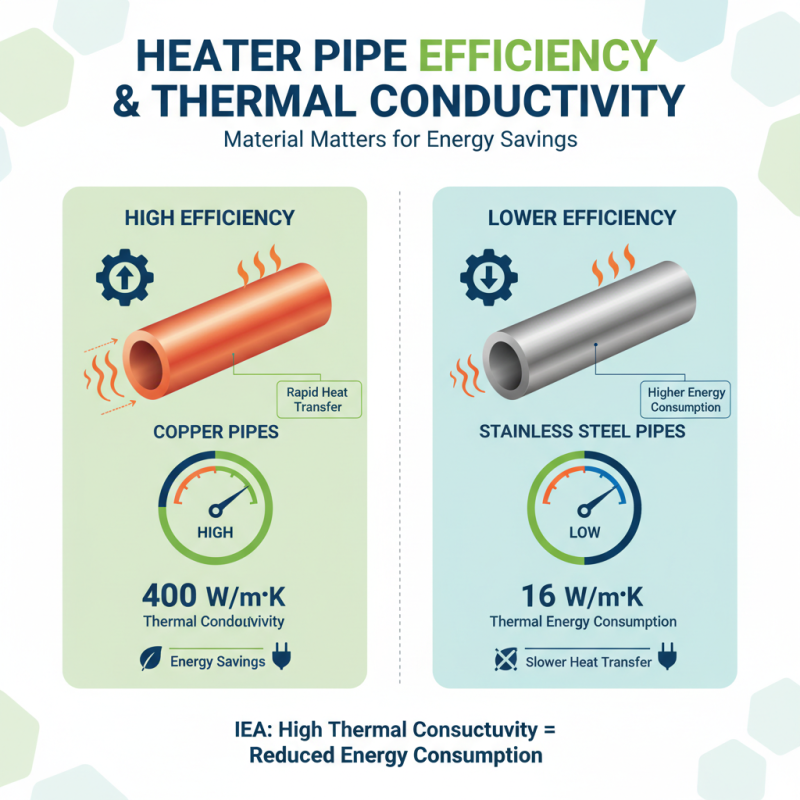
When selecting heater pipes, assessing their heating efficiency and thermal conductivity is crucial. The thermal conductivity defines how well a material transmits heat. According to the International Energy Agency (IEA), materials with high thermal conductivity can significantly reduce energy consumption. For example, copper pipes exhibit thermal conductivity ratings around 400 W/m·K, while stainless steel is approximately 16 W/m·K. Choosing the right material can lead to energy savings and temperature maintenance.
Heating efficiency relates to how effectively heating systems deliver warmth. A comprehensive study by the U.S. Department of Energy revealed that inefficient systems lose up to 30% of heat through poor insulation in pipes. Additionally, the layout of heater pipes influences performance. Straight configurations often outperform convoluted arrangements, enhancing heat distribution. Evaluating the installation environment, particularly insulation and pipe diameter, is critical.
Reflecting on these factors can lead to better decisions. Not all pipe materials suit every situation. It is essential to consider specific heating demands. Understanding the efficiency and conductivity can help in choosing the right pipe. Balancing cost, performance, and longevity is not straightforward. Each project comes with unique requirements that demand careful reflection on the chosen materials.
Calculating the Required Pipe Size for Optimal Heat Distribution
Choosing the right heater pipes is crucial for effective heating. An essential factor is calculating the required pipe size. This ensures optimal heat distribution throughout your space. Using undersized pipes can lead to insufficient heat delivery. On the other hand, oversized pipes may result in wasted energy.
Start by measuring the area you want to heat. Gather information about the insulation, window sizes, and other factors that affect heat loss. A common mistake is neglecting these details. They significantly influence the heater's efficiency. You can use online calculators to get a rough estimate of the necessary pipe diameter.
Consider the material of the pipes as well. Different materials can conduct heat differently. Copper is highly efficient, but it can be expensive. PVC is cost-effective but may not withstand high temperatures. Balancing cost and performance is vital. Choosing the appropriate size and material can maximize comfort. Remember, the right setup can lead to improved energy efficiency. Evaluate your choices and adapt based on your heating needs.
Heat Distribution by Pipe Size
Considering Installation and Maintenance Requirements for Heater Systems
When selecting heater pipes, installation and maintenance requirements are crucial. The type of heater system you choose affects both ease of setup and long-term upkeep. For example, if you're considering a hydronic heating system, the pipe material is a fundamental factor. Copper, for instance, is durable and resistant to corrosion. However, it can be more expensive and harder to install compared to PEX piping.
It’s essential to know your space. Do you have the room for traditional piping systems? If not, consider more flexible options like PEX. This type can bend around corners easily, saving on extra fittings. Also, inspect your existing infrastructure. Old, incompatible pipes can lead to frustrations during installation.
Tips: Always check local codes before installation. This ensures you meet safety and efficiency standards. Regular maintenance checks can prevent costly repairs down the line. Additionally, don’t overlook insulation. Proper insulation minimizes heat loss and enhances efficiency. Even small leaks can lead to significant energy waste. Be mindful of these details for optimal performance.