Leave Your Message

2026 How to Choose the Best Rod Heaters for Your Needs?

Choosing the right Rod Heaters can significantly impact your project's success. These devices efficiently provide heat for various applications, like keeping fluids warm and ensuring stable temperatures in industrial settings. However, with numerous options available, selecting the best heater may feel overwhelming.

Start by considering specific needs. Different environments and tasks require tailored heating solutions. You should evaluate power requirements, size, and mounting options. Researching brand reputation and user reviews also helps gauge product reliability.

Remember, the ideal Rod Heater should meet your needs without overloading your budget. Take the time to reflect on your choices, as a well-informed decision can save costs and enhance overall efficiency. The right choice will offer both functionality and peace of mind, making the investment worthwhile.
2026 How to Choose the Best Rod Heaters for Your Needs?

Understanding the Different Types of Rod Heaters Available in the Market

When looking for rod heaters, understanding the types available is essential. There are several types that cater to different heating needs. The most common include cartridge heaters, band heaters, and infrared heaters. Cartridge heaters are known for their efficiency in small spaces. They provide direct heating to a specific area and often heat quickly.

Band heaters are ideal for larger applications. They wrap around cylindrical objects and distribute heat evenly. This makes them great for processes requiring consistent temperature control. On the other hand, infrared heaters utilize radiant heat. They can be energy-efficient in specific scenarios but might not be suitable for all applications.

Choosing the right rod heater requires careful consideration of your specific needs. Different materials and designs can affect performance. Ensure you also factor in the installation process and maintenance requirements. Researching each type is crucial. There is a wealth of information available, but not all of it is reliable. Take time to validate these sources for the best outcomes.
Key Factors to Consider When Choosing a Rod Heater for Your Needs

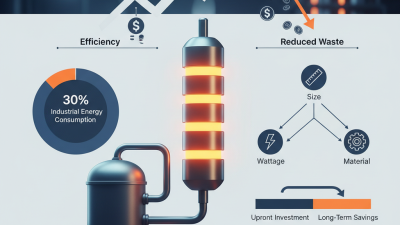
When selecting the best rod heater, several key factors come into play. Understanding the specific heating requirements for your application is crucial. For instance, rod heaters can generate temperatures up to 1200°F, making it essential to assess your desired temperature ranges accurately. According to industry data, approximately 30% of heating issues stem from incorrect heater selection, emphasizing the need for careful consideration.


Another vital factor is the power source. Many rod heaters operate on either electric or gas, with electric options being more efficient in some contexts. A recent study found that electric heaters can reduce energy costs by up to 25% compared to gas models. Additionally, compatibility with existing systems and the ease of installation can significantly impact the overall effectiveness and reliability of the heater.


Thermal conductivity also plays a significant role. The material of the rod can affect heat transfer efficiency. Common materials include aluminum and stainless steel, each with distinct conductivity properties. For example, aluminum offers better thermal conductivity, which can enhance efficiency, but may not withstand high temperatures as well as stainless steel. Understanding these details can lead to better performance and longevity of the heating system.

Evaluating the Energy Efficiency of Rod Heaters

When evaluating the energy efficiency of rod heaters, it's essential to consider several key factors. First, look for the wattage of the heater. Lower wattage often means less energy consumption. However, it’s crucial to balance this with the performance you need. A heater with too low wattage may underperform.

Another important aspect is the insulation of the space being heated. Poor insulation can lead to energy loss, forcing the heater to work harder. This impacts energy bills and efficiency. Ensure that your space is well-insulated to maximize the effectiveness of your rod heater.

**Tips:**
Choose a heater with a programmable thermostat to enhance efficiency. This feature allows you to set specific temperatures for different times of the day. Keep an eye on your utility bills. Fluctuating costs may indicate inefficiencies in your heating setup. Periodically review your heater's performance. It’s vital to acknowledge when a unit may not be the best fit for your requirements.

Comparing Cost and Performance of Various Rod Heater Models

When choosing rod heaters, cost and performance are key factors. These heaters are essential in numerous applications, from industrial settings to home use. The variety in models can be overwhelming. Pricing often reflects build quality and temperature output. A lower-priced model may save money upfront but could lead to higher energy bills.

Performance should not be ignored. A high-quality heater offers more consistent heating and can be more efficient. Energy-efficient models can lead to long-term savings and reduced environmental impact. However, consumers often overlook the importance of proper installation and usage. A poorly maintained heater may fail to operate effectively, negating savings.

Assessing the right balance of cost and efficiency is crucial. Some users find that high initial costs can pay off over time, while others struggle to see value. User reviews and detailed specifications can guide selection. Research different models thoroughly. Always question whether the heater will truly meet your needs. This reflection can lead to better purchasing decisions.

2026 How to Choose the Best Rod Heaters for Your Needs?

Model Power (Watts) Price ($) Efficiency (%) Weight (lbs)
Model A 1500 100 90 10
Model B 2000 150 85 12
Model C 1000 75 92 8
Model D 1800 120 88 11

Safety Features to Look for in Rod Heaters

When choosing rod heaters, safety features should be a priority. Look for models with automatic shut-off systems. These are vital to prevent overheating. Many modern heaters include built-in thermal protection. This feature automatically disengages the heater if it exceeds safe temperature thresholds. It’s a crucial safety measure that can prevent accidents.

Another important aspect is the design of the heater itself. Heaters with durable, heat-resistant materials are essential. Check if the casing can withstand high temperatures. Many heaters offer protective guards or grilles. These minimize the risk of contact burns. You need to ensure the cords are robust and have safety certifications. Consider water resistance ratings, especially in humid environments.

Take time to assess user reviews. Sometimes, what seems reliable can turn out to be the opposite. Many heaters may not deliver the expected safety performance. A heater can appear sturdy, yet fail in critical situations. Don’t overlook the importance of proper installation. Even the best-constructed heaters need correct setups for maximum safety.