Choosing a Mica Insulated Band Heater begins with the process, not the product photograph. The correct heater must match the barrel diameter, heating zone, operating temperature, watt density, voltage, and available space. A loose band can create cold spots. An oversized unit may waste energy or damage sensitive materials. Small details matter.
As thermal-systems specialist Michael J. O’Connor explains, “A band heater performs well only when heat transfer, electrical load, and installation quality are considered together.” This practical view reflects what experienced technicians see on production floors. A heater wrapped around a clean, smooth cylinder transfers heat more effectively than one installed over residue, dents, or uneven surfaces. Mica insulation also deserves attention. It provides reliable electrical insulation and fast heat response, but it can be less tolerant of rough handling and moisture during installation.
Check the machine’s real conditions. Is the barrel exposed to vibration? Will operators remove the heater frequently? Does the process use plastics that release corrosive vapors? These questions influence terminal style, clamping method, insulation protection, and service life. Measure carefully. Guessing is expensive.
There is no perfect selection formula. In practice, even a well-calculated heater may need adjustment after observing startup time, temperature stability, and surface temperature. I would also question any supplier that recommends wattage without asking about the barrel material or production cycle. That omission is easy to miss. A reliable supplier should provide drawings, electrical specifications, installation guidance, and technical support. When these factors are reviewed together, choosing a Mica Insulated Band Heater becomes a controlled engineering decision rather than a hurried replacement.
How to Choose a Mica Insulated Band Heater?
Define the Heating Requirements and Operating Conditions
Start with the barrel or vessel dimensions. Measure the outside diameter, heated width, and available installation space. These details determine the heater’s shape and fit. Then identify the target temperature, heat-up time, material, and production cycle. A small laboratory cylinder needs different heating than a continuously operating processing barrel.
Calculate the required wattage from the material load, heat losses, and expected temperature rise. Consider the operating voltage and available electrical supply. Watt density also matters because excessive surface heat can damage sensitive materials. Mica insulation offers good thermal performance, but it still requires firm contact with the heated surface. Gaps can create hot spots and slow heat transfer. They are easy to overlook.
Tips: Measure twice. Check the barrel surface for dents, residue, or unevenness before installation. Confirm the heater’s maximum operating temperature and terminal position. Use a suitable temperature sensor near the working zone, not only near the heater edge. A properly adjusted controller can reduce overheating during repeated cycles.
Review the environment carefully. Moisture, vibration, dust, and frequent removal can affect heater life. Stainless steel covers may suit demanding conditions, while standard construction may be adequate in a clean, dry area. In practice, calculations are only a starting point. Actual heat loss can differ from estimates, especially around openings and uninsulated sections. Record operating results after installation, then reconsider the wattage or insulation if heating remains uneven.
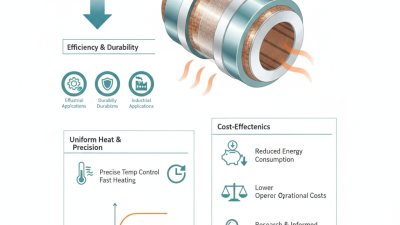
Choosing a mica insulated band heater starts with comparing its design and electrical rating. In daily maintenance work, I check barrel diameter, heater width, clamp clearance, and terminal position before reviewing price. A one-piece band suits open access and simple installation. A two-piece or hinged design fits machines with limited side clearance. Split bands also reduce removal time, but poor clamping can create cold zones.
Electrical ratings deserve closer attention. Voltage and wattage determine current: a 240-volt, 1,500-watt heater draws 6.25 amps. The controller, wiring, and terminals must safely handle that load. Watt density matters more than total wattage when the barrel surface is small. Excessive density may darken the mica, damage insulation, or overheat the polymer. U.S. Department of Energy process-heating assessments identify heating as roughly 51% of manufacturing energy use, so inefficient sizing becomes expensive quickly.
I once treated wattage as the deciding number. That was a mistake. Compare the rated voltage, watt density, insulation resistance, operating temperature, and duty cycle together. IEC 60519-1 provides useful guidance for electrical safety in industrial heating equipment. The IEA’s Energy Efficiency 2023 report also links industrial energy performance with equipment control and system losses. A heater rated for 240 volts should not be casually connected to 220 volts without checking output changes. Small differences matter. Measure the actual supply, confirm terminal tightness, and leave room for thermal expansion. Manufacturer data should be verified against the machine’s real dimensions, because catalogs can simplify imperfect conditions.
| Band Heater Design | Typical Construction | Typical Diameter Range | Typical Width Range | Typical Voltage | Typical Watt Density | Typical Maximum Operating Temperature | Best-Fit Applications | Main Selection Consideration |
|---|---|---|---|---|---|---|---|---|
| Standard One-Piece Band | Resistance wire embedded between mica sheets and enclosed in a metal sheath; fixed mounting holes or terminals. | Approximately 25–500 mm | Approximately 20–100 mm | 120, 208, 220, 230, 240, 380, or 480 V AC | Approximately 2.5–5 W/cm² | Approximately 350–450°C, depending on construction and heat transfer | Injection molding barrels, dies, tanks, pipes, and general cylindrical heating. | Requires access to slide the heater over the cylinder or install it before adjacent parts are fitted. |
| Hinged Band | One-piece mica band with a mechanical hinge that allows the heater to open around an installed cylinder. | Approximately 50–400 mm | Approximately 25–100 mm | 120–480 V AC | Approximately 2.5–4.5 W/cm² | Approximately 350–450°C | Existing machinery where removing shafts, molds, or piping is impractical. | The hinge and clamping hardware must remain secure and maintain close contact during thermal cycling. |
| Two-Piece Split Band | Two separate semicircular heater sections joined or clamped around the workpiece. | Approximately 100–600 mm | Approximately 40–150 mm | 120–480 V AC | Approximately 2–5 W/cm² | Approximately 350–450°C | Large barrels, flanges, extruders, and installations with limited radial clearance. | Each section may require separate wiring or balanced circuits for uniform heating. |
| Multi-Segment Band | Several independently controlled mica heater sections arranged around one cylinder. | Approximately 100–800 mm | Approximately 50–200 mm | 120–480 V AC | Approximately 2–4 W/cm² per zone | Approximately 350–450°C | Extrusion equipment and process zones requiring different temperatures along the barrel. | Confirm the number of zones, circuit separation, controller outputs, and total installed current. |
| High-Temperature Mica Band | Enhanced mica insulation and higher-temperature materials used for demanding thermal environments. | Approximately 25–500 mm | Approximately 25–100 mm | 120–480 V AC | Approximately 2–4 W/cm² | Approximately 450–600°C, subject to design and cooling conditions | Applications requiring elevated sheath temperatures or frequent thermal cycling. | Verify the actual rated temperature of the heater, terminals, wiring, and surrounding equipment. |
| Nozzle or Small-Diameter Band | Compact mica heater formed for short lengths and small cylindrical surfaces, often with localized terminals. | Approximately 20–100 mm | Approximately 15–50 mm | 120–240 V AC | Approximately 2–4 W/cm² | Approximately 300–450°C | Molding-machine nozzles, small dies, adapters, and compact metal components. | Measure the actual outside diameter and available width; small gaps can significantly reduce heat transfer. |
| Strip or Flexible Mica Heater | Flat mica-insulated resistance element designed to wrap around or attach to a surface with clamps. | Application-dependent; commonly used on large or irregular surfaces | Approximately 20–150 mm | 120–240 V AC | Approximately 1.5–4 W/cm² | Approximately 300–450°C | Large surfaces, prototypes, repair work, and applications requiring a custom heating layout. | Use suitable clamping and avoid sharp bends, localized overheating, or unsupported sections. |
Choosing a mica insulated band heater starts with accurate measurements, not guesswork.
Measure the barrel’s outside diameter and heating width with calipers. A small error can create poor contact and uneven heating. The heater should fit firmly, but it must not crush the surface.
Match the heater shape to the equipment. Standard cylindrical bands suit smooth, round barrels. Split bands help when installation requires removing fewer components. For irregular surfaces, a shaped heater may provide better contact.
Check the required voltage and wattage carefully. Excessive watt density can damage sensitive materials or cause hot spots. Lower wattage may heat too slowly.
In practice, the ideal choice depends on insulation, production speed, and operating temperature. Even experienced technicians sometimes overlook nearby clamps or sensor ports. Leave space for them.
Tips:
Measure the barrel at several points. Compare the readings before ordering. Confirm terminal direction, lead length, and connection clearance.
Screw terminals suit fixed installations, while flexible leads help with limited access. Ceramic terminal blocks can handle demanding temperatures, but they still need secure wiring.
Never assume the existing connection type is correct. Inspect discoloration, loose fasteners, and damaged insulation during replacement. One overlooked detail can shorten heater life.
Record the final dimensions and electrical ratings for future maintenance. That small record saves time later.
How to Choose a Mica Insulated Band Heater?
When selecting a mica insulated band heater, examine the material before comparing price. Stainless steel jackets resist moisture and repeated clamping. Aluminized steel may transfer heat efficiently at a lower cost. Confirm the sheath thickness and diameter match the barrel or nozzle. A loose band creates cold spots. An overly tight band may deform during heating. In practical installations, small gaps often cause uneven plastic flow and longer warm-up times. Check watt density against the equipment manufacturer’s operating range, not only the heater’s maximum wattage.
Mica insulation should provide stable heat transfer and electrical separation. Inspect its thickness, compression resistance, and rated temperature. Poor insulation can waste energy and raise nearby surface temperatures. Look for grounded terminals, secure lead wires, and suitable strain relief. Independent temperature testing is valuable, especially near connectors and clamp edges. A built-in thermocouple opening can improve control, but its location matters. I have seen accurate controllers give poor results when sensors sit far from the hottest zone. The design may look correct. The measurement can still be wrong.
Tips: Measure the barrel first. Check voltage and wattage twice. Use a thermal camera during commissioning. Watch for glowing spots, loose terminals, or unusual odors. These signs deserve attention. Also, review the heater after several heating cycles. My first selection would not always be my final one; real operating conditions can reveal weaknesses that a specification sheet misses.
Evaluate insulation materials, thermal capability, durability, moisture resistance, and safety requirements before selecting a band heater.
This comparison uses a practical 1–5 engineering rating based on typical material behavior. Muscovite mica is commonly selected for economical, moderate-temperature applications, while phlogopite mica offers better high-temperature performance. Ceramic insulation generally provides the highest thermal capability but may be more brittle and costly.
For safe operation, confirm proper grounding, use a compatible thermostat or thermocouple, install an independent over-temperature cutoff where required, maintain even surface contact, and avoid energizing the heater without adequate heat transfer.
Choosing a mica insulated band heater starts with the installation, not the catalog temperature. Measure the barrel diameter and heater width carefully. A small gap can create hot spots, while excessive tightening may damage the mica insulation. Check that terminals face a safe direction and remain clear of wiring, moisture, and moving parts. Follow the equipment manual and applicable electrical codes. Do not rely on appearance alone.
Temperature control must match the process material and heating zone. Use a properly rated sensor, such as a thermocouple, and place it close to the actual heating surface. Confirm the controller’s voltage, current, and response range before energizing the heater. In field service, I have seen stable readings hide poor sensor placement. The display looked correct. The barrel was not. That mistake deserves more attention.
Tips:
Record the heater resistance before installation. Recheck terminal tightness after the first heat cycle. Inspect for loose connections, discoloration, crushed insulation, or uneven heating during scheduled maintenance. Keep spare heaters dry and protected from impact. A clean surface improves heat transfer. Small details matter.
Maintenance should reflect operating hours, temperature changes, and production dust. Shut down and isolate power before inspection. Never continue using a heater with damaged leads or exposed insulation. I once underestimated gradual oxidation around a terminal; the heater still worked, but its performance became unreliable. Regular records make these changes easier to detect.