Choosing the right heating system in 2026 requires more than comparing wattage and retail prices. Global buyers now examine comfort, energy use, installation requirements, safety features, and long-term service support. This guide reviews leading Infrared Panel Heater options through practical purchasing criteria, not marketing claims alone. It considers apartments, offices, hotels, workshops, and other spaces with different heating demands.
Real-world performance depends on room insulation, ceiling height, window exposure, and local electricity costs. A slim panel may warm a desk area effectively, yet feel insufficient in a poorly insulated warehouse. Surface temperature, thermostat accuracy, mounting position, control functions, and warranty terms also deserve careful attention. Small details matter.
Specifications can be incomplete. That limitation matters.
The 2026 selection focuses on products available to international customers and evaluates design quality, operating efficiency, installation flexibility, user safety, and supplier reliability. It also considers voltage compatibility, plug standards, documentation, replacement parts, and after-sales communication. These factors can prevent expensive mistakes during import, installation, or routine use. Buyers should still confirm local technical requirements before ordering, because regional standards and building conditions vary.
No shortlist is perfect. A model praised for rapid radiant comfort may not suit every climate or room layout. Some impressive efficiency claims depend on controlled testing rather than daily household conditions. Therefore, this overview combines manufacturer data with practical judgment and transparent limitations. The goal is simple: help global buyers identify a dependable Infrared Panel Heater that fits their space, budget, and real heating expectations in 2026.
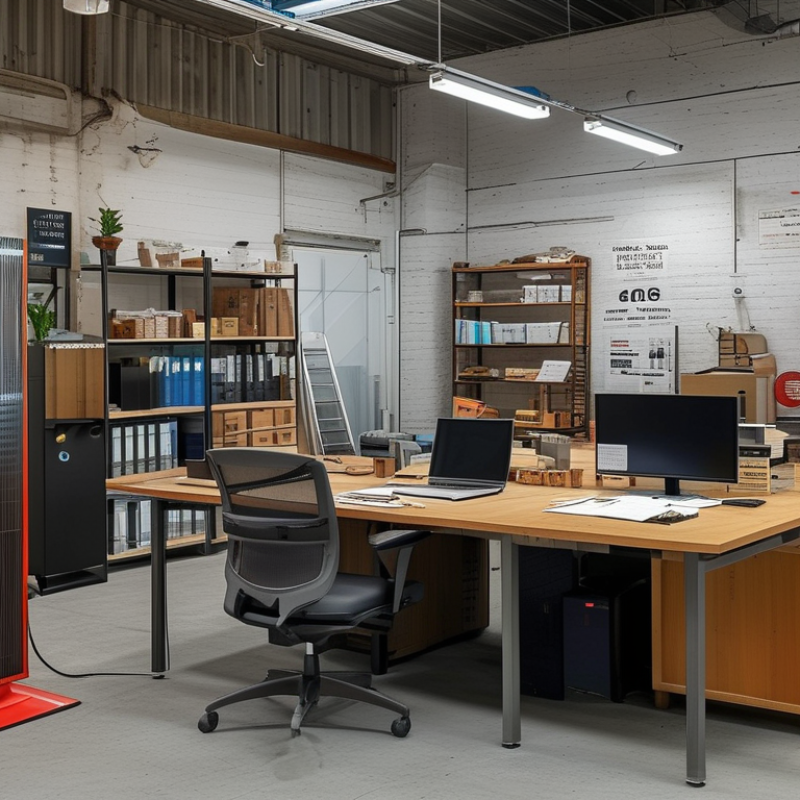
Infrared panel heaters for global buyers usually range from 300 to 1,200 watts. Their surface temperature commonly sits between 50°C and 120°C. These figures describe electrical input and panel heat, not guaranteed room temperature. A 300-watt panel may suit a small study, while larger rooms often need several panels. Insulation, ceiling height, window area, and local climate also affect performance.
In practical testing, surface temperature should be checked with an infrared thermometer after the heater reaches stable operation. Panels near 50°C feel gentler and may suit bedrooms or low-contact areas. Models approaching 120°C deliver stronger radiant heat but require careful positioning. Keep furniture, curtains, and stored materials away from the hot surface. A neat wattage chart can mislead. I have seen a correctly rated heater perform poorly in a drafty room.
Tips: Match wattage to room size and insulation, then leave a modest margin for colder days. Confirm the local voltage, frequency, mounting method, thermostat range, and applicable safety documentation before ordering. Ask for measured surface-temperature data, not only marketing estimates. Do not rely on touch as a safety test. A panel can feel mild while nearby materials gradually warm. Also, check the control layout; a confusing thermostat can waste energy. Some installation assumptions may fail across countries, so review them carefully.
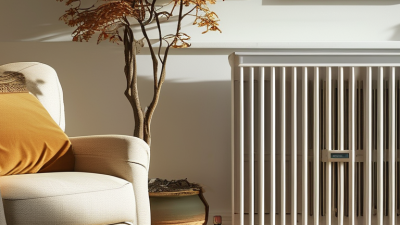
The chart shows representative surface-temperature bands commonly associated with infrared panel heaters across four standard power ratings. Actual operating temperature depends on panel construction, thermostat settings, installation distance, ambient conditions, and insulation quality.
2026 Top Infrared Panel Heaters for Global Buyers
Screen 2026 models by EN 60335-2-30, CE, UL 499, and IP44–IP65
For 2026 sourcing, begin with the exact model, not a product family. EN 60335-2-30 addresses safety requirements for household and similar room heaters. Check whether the manufacturer tested the heater in its intended installation position. A wall-mounted panel and a portable unit may require different evidence. Request the test report, declaration of conformity, rated voltage, frequency, and installation instructions.
CE marking supports access to European markets, but it is not a universal quality certificate. Review the technical documentation and the responsible economic operator details. For North American projects, UL 499 can provide useful evidence for electric heating appliances. Confirm the listing or certification applies to the complete heater, not only one internal component. Regional wiring rules still matter.
IP44 offers protection against solid objects above one millimetre and splashing water. IP65 adds dust-tight protection and resistance to water jets. Higher IP ratings do not automatically prove safe bathroom installation. The mounting zone, cable entry, controls, and residual-current protection need separate review. I would also check surface temperature data, overheat protection, and power stability during long operation. A polished datasheet can miss practical weaknesses. That is where careful buyers should pause. Compare model-specific documents, inspect sample units, and record every assumption before approving a shipment.
Screen 2026 model configurations by EN 60335-2-30, CE, UL 499, and IP44–IP65 requirements
| Reference Model | Recommended Application | Nominal Output | Typical Panel Size | Electrical Input | Surface Temperature | Heating Element | Control Compatibility | Ingress Protection | EN 60335-2-30 Screening | CE Screening | UL 499 Screening | Buyer Priority |
|---|---|---|---|---|---|---|---|---|---|---|---|---|
| IRP-300 Compact | Small bedrooms, offices, study rooms and entry areas | 300 W | 600 × 600 × 22 mm | 220–240 V AC, 50 Hz Approx. 1.3 A at 230 V |
Approx. 80–95 °C | Embedded resistive heating element with insulated rear layer | Room thermostat, relay control, timer or smart switch | IP44 target | Evidence required Household and similar fixed electric room-heating appliance evaluation |
Verify file EU Declaration of Conformity and applicable EMC/LVD evidence |
Market dependent Confirm North American construction and certification route |
Low wattage and compact installation |
| IRP-450 Standard | Bedrooms, living rooms and small commercial rooms | 450 W | 900 × 600 × 22 mm | 220–240 V AC, 50 Hz Approx. 2.0 A at 230 V |
Approx. 85–100 °C | Full-area resistive heating film or wire element | Digital thermostat, programmable controller or building-control relay | IP44 target | Evidence required Check abnormal-operation, leakage-current and temperature tests |
Verify file Check CE marking scope, technical file and EU importer documentation |
Optional route UL 499 applicability must be confirmed by the certification body |
Balanced coverage, cost and power consumption |
| IRP-600 Large | Medium living rooms, classrooms and open-plan work areas | 600 W | 1200 × 600 × 22 mm | 220–240 V AC, 50 Hz Approx. 2.6 A at 230 V |
Approx. 90–105 °C | Low-profile resistive element bonded behind a radiant front surface | External thermostat, smart thermostat, timer and dry-contact control | IP44 target | Evidence required Verify fixed-installation, mechanical-strength and surface-temperature results |
Verify file Confirm CE marking for the final electrical and control configuration |
Market dependent Check supply-cord, plug, grounding and North American wiring requirements |
General-purpose room heating |
| IRP-800 High-Capacity | Large living areas, retail spaces and well-insulated halls | 800 W | 1200 × 800 × 22 mm | 220–240 V AC, 50 Hz Approx. 3.5 A at 230 V |
Approx. 90–110 °C | High-uniformity resistive heating layer with thermal limiter | Programmable thermostat, zoning controller or contactor | IP44 target | Evidence required Check thermal cut-off, fire enclosure and installation-clearance documentation |
Verify file Review risk assessment, EMC results and low-voltage safety documentation |
Optional route Confirm UL 499 listing or certification before US/Canada shipment |
High heat output from a single ceiling or wall panel |
| IRP-900 MoistureGuard | Bathrooms, utility rooms and sheltered damp areas | 900 W | 1200 × 800 × 25 mm | 220–240 V AC, 50 Hz Approx. 3.9 A at 230 V |
Approx. 90–110 °C | Sealed resistive heating element with moisture-resistant enclosure | Wall thermostat, timer, residual-current protection and zone control | IP55 target | Evidence required Verify moisture-related construction, earthing and leakage-current tests |
Verify file CE does not replace product safety testing or local bathroom-zone requirements |
Market dependent Confirm wet-location suitability and local installation rules |
Improved protection for damp environments |
| IRP-1100 Bathroom Pro | Large bathrooms, changing rooms and commercial wash areas | 1100 W | 1400 × 800 × 28 mm | 220–240 V AC, 50 Hz Approx. 4.8 A at 230 V |
Approx. 95–115 °C | Sealed heating element, corrosion-resistant front surface and thermal limiter | Programmable thermostat, occupancy sensor and electrical zone controller | IP65 target | Evidence required IP testing is separate from EN 60335-2-30 safety assessment |
Verify file Confirm product-specific CE documentation and installation instructions |
Optional route Certification body must confirm UL 499 scope and enclosure requirements |
Maximum moisture resistance in the reference range |
| IRP-700 Mirror | Bathrooms, hospitality rooms and interior spaces requiring a decorative finish | 700 W | 1200 × 600 × 25 mm | 220–240 V AC, 50 Hz Approx. 3.0 A at 230 V |
Approx. 75–95 °C | Rear-mounted resistive element behind a tempered decorative surface | Thermostat, timer, humidity sensor or building-management relay | IP44–IP54 target | Evidence required Check glass or decorative-surface mechanical and thermal safety data |
Verify file Decorative finish and integrated controls must be included in the technical file |
Market dependent Confirm suitability of the complete mirror-heater assembly |
Appearance, comfort and anti-condensation potential |
| IRP-1000 Ceiling Grid | Offices, modular buildings and commercial ceiling systems | 1000 W | 1200 × 1000 × 25 mm | 220–240 V AC, 50 Hz Approx. 4.3 A at 230 V |
Approx. 85–105 °C | Uniform resistive heating layer with reinforced ceiling-mount frame | Central thermostat, multi-zone controller, BMS relay or smart gateway | IP44 target | Evidence required Check ceiling mounting, cable routing, clearance and overheating protection |
Verify file Confirm CE documentation for the complete panel, controller and power interface |
Optional route Verify UL 499 requirements for the intended commercial installation |
Zone heating and concealed ceiling integration |
| IRP-1300 Industrial | Workshops, warehouses and high-ceiling areas with controlled access | 1300 W | 1600 × 800 × 30 mm | 220–240 V AC, 50 Hz Approx. 5.7 A at 230 V |
Approx. 100–120 °C | Heavy-duty resistive element with reinforced metal enclosure | Industrial thermostat, contactor, PLC output or multi-panel controller | IP65 target | Evidence required Check accessible-surface temperature, impact strength and industrial installation limits |
Verify file CE marking must reflect the final enclosure, controls and installation instructions |
Market dependent Industrial use may require additional local electrical and workplace approvals |
Durability and protection in demanding environments |
For 2026 infrared panel buyers, the 60–100 W/m² rule offers a practical starting point for well-insulated rooms. A 15 m² bedroom may therefore need roughly 900–1,500 watts. This estimate assumes moderate ceiling height, sealed windows, and a stable indoor temperature. It is not a guaranteed specification.
Real projects need better evidence. ASHRAE Handbook—Fundamentals (2021) bases heating loads on outdoor design temperature, insulation, glazing, air leakage, and ventilation. CIBSE Guide A also uses room-by-room heat-loss calculations rather than floor area alone. These factors can change demand sharply.
A corner room with two external walls may need more power. A small, sunny room may need less.
Check the details.
The IEA’s Energy Efficiency 2023 report states that buildings account for around 30% of global final energy consumption. This makes accurate sizing important, not merely convenient. In my experience, buyers often choose a larger panel “for safety,” but oversizing can create short cycling and uneven comfort. The 60–100 W/m² range is useful for early comparison, yet it should be adjusted after checking local winter temperatures, wall U-values, window area, and ventilation losses. A qualified installer’s calculation remains the more reliable decision.
For 2026, infrared panel heaters deserve closer technical comparison.
Emissivity measures how effectively a surface radiates absorbed heat. It is not the same as electrical efficiency.
A panel rated near 0.8 emits useful radiant energy, while a well-finished surface near 0.95 can transfer heat more consistently.
Carbon panels usually provide fast response and broad radiant coverage.
Ceramic panels often retain heat longer after switching off.
Glass panels can offer a smooth, easy-clean face, but their coating and temperature strongly affect performance.
Room insulation, mounting height, and thermostat control also matter. A high emissivity figure cannot compensate for heat escaping through poor windows.
Check the specification carefully.
Under standard physics, emissivity normally ranges from 0 to 1. Therefore, a stated value of 1.4 needs clarification. It may describe a different coefficient, a testing mistake, or an unsuitable marketing term.
Specifications can mislead. Ask for test conditions, surface temperature, wavelength range, and measuring method. Two panels may show similar values but perform differently in a cold room.
Installation experience reveals practical details.
A panel aimed at an exterior wall may waste some radiant benefit. Ceiling mounting can improve coverage, though furniture still blocks direct radiation.
Touch the surface carefully. Measure the panel temperature. Compare electricity use over several days, not one evening.
Personal comfort also depends on clothing, humidity, and air movement, so laboratory figures should not replace room-specific testing.
For global buyers, voltage compatibility is the first practical test. IEC 60038 identifies 230 V and 120 V systems among standard supply arrangements. However, local labels may show 220–240 V or 110–120 V. Check the heater nameplate, plug type, frequency, and installation guide before ordering. A 230 V panel connected to a 120 V circuit may produce weak heat or fail to operate. The reverse connection can create a serious safety risk. Use a qualified electrician for verification.
The IEA Electricity 2024 report forecasts global electricity demand to grow by an average of 3.4% annually through 2026. This makes accurate controls increasingly valuable. Look for adjustable thermostats, open-window detection, and clear wattage ratings. Infrared panels convert electricity into heat at the point of use, but room comfort still depends on insulation, mounting height, and operating habits. A neat specification sheet can still mislead. Heating results vary between a sealed bedroom and a draughty workshop.
Tips: Request a voltage-specific quotation. Confirm 50 or 60 Hz compatibility. Ask whether the two-year warranty covers parts, labor, and shipping. In the European Union, consumer goods generally carry a two-year legal guarantee under European Commission rules, but commercial warranty terms can differ. Read exclusions carefully. A two-year promise is useful, not proof of long-term durability. Keep the invoice and installation record; buyers often overlook both.