Leave Your Message

How to Choose Infra Ray Heaters for Your Needs?

Choosing Infra Ray Heaters is not simply a matter of selecting the highest wattage. Room size, ceiling height, insulation, ventilation, occupancy, and local electricity prices all influence performance. A heater that feels comfortable beside a workbench may leave a poorly insulated workshop cold. The choice is rarely obvious.

The International Energy Agency reports that buildings consume about 30% of global final energy and produce roughly 26% of energy-related emissions. These figures make efficient heating decisions increasingly important. The U.S. Department of Energy explains that radiant heaters transfer heat directly to people and surfaces, rather than warming all the air first. This can suit bathrooms, patios, warehouses, home offices, and rooms used intermittently. However, “nearly 100%” electrical conversion at the heater does not guarantee low operating costs. Electricity tariffs, insulation, thermostat control, and usage duration still matter.

A reliable selection process should compare coverage area, infrared wavelength, mounting position, controls, safety certification, and installation requirements. Short-wave models can deliver rapid, focused warmth, while longer-wave systems may provide gentler heat for enclosed spaces. Manufacturer claims require careful checking. Some advertised coverage figures assume mild weather, sheltered locations, or ideal mounting heights. That assumption can fail.

Measure the space first. Note cold drafts, reflective walls, nearby furniture, and the distance between occupants and the heating zone. The best model is not always the most powerful one. It is the heater that matches the room, usage pattern, safety needs, and realistic energy budget. Evidence helps. Practical testing matters too.
How to Choose Infra Ray Heaters for Your Needs?

Understanding How Infrared Heaters Work

How to Choose Infra Ray Heaters for Your Needs?

Infrared heaters warm people and surfaces instead of heating the entire air volume first. An electrical element produces infrared radiation, often through a glowing or enclosed heating panel. These waves travel across the room and transfer energy when they meet skin, furniture, floors, or walls. The effect feels similar to standing in gentle sunlight, although the room temperature may change more slowly.

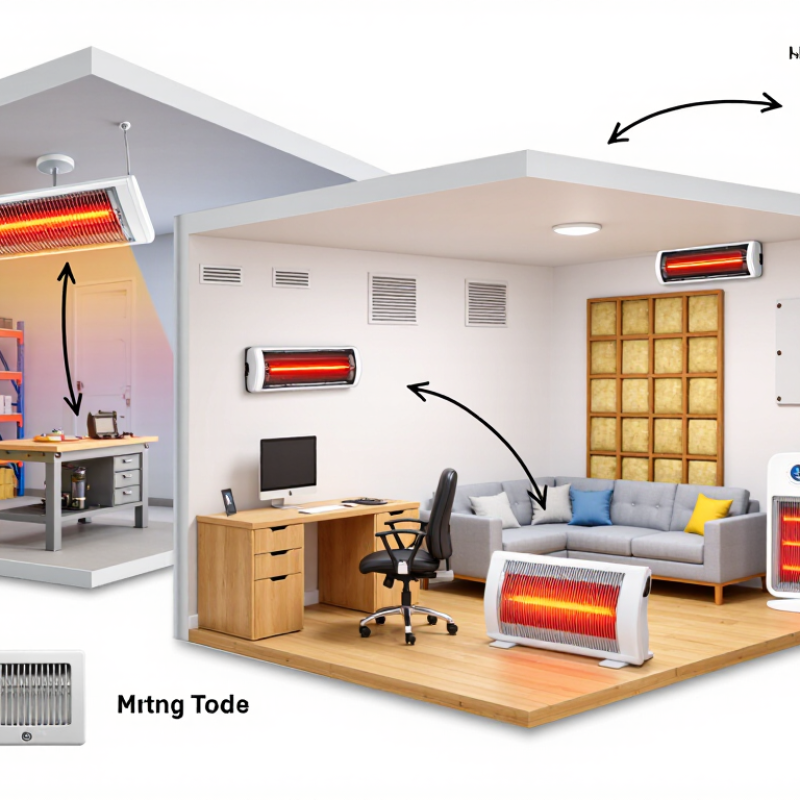
A practical choice depends on how the space is used. For a desk, workshop bench, or outdoor seating area, directional infrared heating can deliver comfort without warming unused corners. For a bedroom or living room, a wider heating pattern may feel more balanced. Check the heater’s output, coverage guidance, mounting height, and thermostat controls. A small room may need less power than expected. My first assumption was that higher wattage always meant better comfort. It did not.

Placement matters as much as electrical rating. Keep clear space around the heater, follow the installation instructions, and avoid blocking the radiant surface with curtains or furniture. A surface can feel warm while the opposite side remains cool. Test the heater from your normal sitting or working position. Notice drafts, shadows, and cold flooring. Infrared heating is not magic. Poor insulation, high ceilings, and open doors can still reduce comfort and increase energy use. Check the plug, cable, and protection rating carefully, especially in damp areas.
Identifying Your Heating Needs and Space Requirements

How to Choose Infrared Heaters for Your Needs?

Start with the room, not the heater. Measure floor area, ceiling height, window size, and wall insulation. Note cold surfaces, drafts, and how often people occupy the space. Infrared heaters warm people and nearby surfaces directly. They may not heat an entire, poorly insulated room evenly. The International Energy Agency reports that buildings consume about 30% of global final energy. This makes accurate heat planning worthwhile. The U.S. Energy Information Administration’s 2020 Residential Energy Consumption Survey found that space heating used 42% of household energy. Your room may perform differently. Building age, weather, and ventilation can change the result.

Observe the space at its coldest time. A large window beside a sofa may create discomfort, even when the thermostat shows a normal temperature. For bedrooms, quiet operation and steady warmth may matter most. For workshops, directed radiant heat can be more practical than heating unused air. Avoid choosing wattage from floor area alone. A qualified heating professional can estimate heat loss using insulation, air leakage, local design temperature, and room dimensions. I have found that simple assumptions often miss ceiling height and door movement. That mistake is easy to overlook.

Tips: Map occupied zones before installation. Check for drafts with a tissue or smoke pencil. Compare surface and air temperatures. Keep furniture clear of the heating path. Review the heater’s safety instructions and electrical requirements. A perfect estimate is unlikely, so reassess comfort after several cold days.

How to Choose Infra Ray Heaters for Your Needs? - Identifying Your Heating Needs and Space Requirements

Heating Need Typical Space Planning Output Range* Suitable Heater Format Installation Guidance Important Considerations
Personal or spot heating
Warm one person or a defined seating area
Small desk area, reading corner, workshop station, or covered patio seat 400–1,000 W Portable or directional infrared heater Aim the heating surface toward the occupied zone and place it on a stable, non-combustible surface when portable. Best for intermittent use; it may not raise the temperature of the entire room evenly.
Small-room comfort heating
Maintain comfort in a compact enclosed room
Approximately 8–15 m² with average insulation and a ceiling up to about 2.7 m 600–1,500 W Wall-mounted or ceiling-mounted infrared panel Position the panel where its radiant surface has a clear view of the occupied area. Check wall, window, and ceiling insulation because heat loss can substantially change the required output.
Whole-room heating
Provide consistent comfort throughout a living space
Approximately 15–30 m² in a reasonably insulated room 1,200–2,500 W total One large panel or multiple smaller panels Use multiple panels when the room has separate seating zones, cold external walls, or an irregular layout. Several correctly positioned panels can improve coverage and temperature distribution compared with one oversized unit.
High heat-loss room
Compensate for older construction, drafts, or cold weather
Approximately 15–30 m² with poor insulation, high ceilings, large windows, or frequent door opening 1,800–3,500 W total Multiple infrared panels or a higher-output radiant heater Prioritize external walls, windows, and regularly occupied zones; use a qualified assessment for permanent installations. Improving insulation and sealing drafts may reduce the required heater capacity and operating cost.
Bathroom or humid area
Provide localized warmth before and after bathing
Small bathroom or changing area 500–1,500 W Fixed infrared panel specifically approved for humid locations Installation must comply with local electrical regulations and the heater’s specified wet-zone clearance requirements. Do not use a standard portable heater near water. Confirm the required enclosure or ingress-protection rating before purchase.
Outdoor or semi-outdoor heating
Warm people rather than the surrounding air
Covered balcony, terrace, sheltered dining area, or open-sided workspace 1,500–3,000 W per focused zone Directional radiant heater designed for outdoor use Mount securely at the height and angle specified by the manufacturer, away from combustible materials and direct water exposure unless approved. Wind reduces perceived warmth and efficiency; heating a defined seating zone is more practical than heating the entire outdoor space.
Workshop, warehouse, or high-ceiling area
Heat occupied work zones without conditioning the entire volume
Large, drafty, or high-bay space with localized workstations 2,000 W and above per zone High-output directional radiant units or suspended infrared systems Plan coverage by work zone, mounting height, beam direction, ventilation, and electrical load. A professional heat-loss and electrical-load review is recommended for large or permanently installed systems.

*The output ranges are preliminary planning estimates, not a substitute for a room-by-room heat-loss calculation. Actual requirements depend on climate, insulation, ceiling height, window area, air leakage, target temperature, mounting position, and the heater’s radiant coverage. Always follow the installation, clearance, grounding, and electrical requirements supplied with the selected heater.

Comparing Infrared Heater Types and Heat Output

Choosing an infrared heater starts with understanding how heat output feels, not only reading the wattage label. Infrared energy warms people and nearby surfaces directly, while convection heaters mainly warm moving air. A 1,500-watt unit may feel stronger than expected in a small room. It can also leave distant corners cool.

Near-infrared heaters usually deliver fast, intense warmth, making them useful for patios or short heating periods. Medium-infrared models offer a softer balance between reach and comfort. Far-infrared heaters warm surfaces gradually and often suit bedrooms, offices, or enclosed living areas. Carbon, quartz, and ceramic elements also affect response time. Quartz heats quickly, while ceramic elements may provide steadier warmth. These differences matter more than appearance. I once selected a powerful heater for a drafty room, but the heat disappeared whenever the door opened. The wattage was adequate; the room conditions were not.

Tips: Measure the area first, then check the heater’s recommended coverage. For outdoor use, allow for wind and open sides. Choose adjustable heat settings when people sit at different distances. Keep a simple distance test: sit where the heater will be used for ten minutes. If your face feels hot while your legs stay cold, the angle or heater type may be wrong. Do not assume the highest output is best. A lower setting can feel more comfortable and reduce wasted energy, though this depends on insulation, ceiling height, and local conditions.

How to Choose Infrared Heaters for Your Needs?

Comparing infrared heater types by typical rated heat output

The chart compares common infrared heater categories using typical electrical input ranges for residential and light commercial products. Higher wattage generally provides greater potential heat output, while room insulation, mounting height, coverage area, and thermostat settings also affect performance. Ceramic panels are often selected for lower, steady heat, while halogen and quartz heaters are commonly used when faster radiant heating is needed.

Evaluating Safety, Energy Use, and Installation Options

How to Choose Infrared Heaters for Your Needs?

Safety should guide the purchase before appearance or advertised wattage. The U.S. Department of Energy explains that electric resistance heaters convert nearly 100% of incoming electricity into heat at the point of use. That does not guarantee lower bills. Poor insulation, open doors, and oversized rooms still waste energy. Choose a thermostat, overheat protection, and a recognized electrical safety certification. Keep portable units at least three feet from curtains, bedding, and furniture, as advised by the U.S. Consumer Product Safety Commission. Small details matter.

Energy use depends strongly on control. The International Energy Agency reports that buildings consume about 30% of global final energy. Infrared heating may reduce unnecessary heating by warming people and surfaces directly. Zoning can help in a home office or occupied bedroom. However, a full-room comparison needs measured electricity use, not marketing claims. My first estimate could be wrong. Record kWh consumption for several similar days, then compare comfort and cost.

Installation changes both safety and performance. Wall panels suit fixed zones, while ceiling systems can provide broader coverage. Portable models offer flexibility but need stable floors and clear airflow. Hardwired installations should be assessed by a qualified electrician, especially on older circuits. In bathrooms or damp areas, check the product’s suitable protection rating and local installation rules. A heater that feels warm in a showroom may perform poorly beside a cold window. Room layout deserves careful thought.

Selecting the Best Infrared Heater for Your Setting

Selecting the Best Infrared Heater for Your Setting begins with the space, not the product.

Measure the area, ceiling height, insulation, and usual occupancy. Infrared heaters warm people and surfaces directly, unlike systems that mainly heat moving air. This makes them useful for patios, workshops, bathrooms, and rooms with intermittent use. A wattage shortcut is tempting. It can still mislead.

The U.S. Department of Energy identifies space heating as one of the largest household energy uses, accounting for about 43% of residential energy consumption in its 2020 energy-use data. Zoned infrared heating may reduce wasted heat when only one area needs comfort. However, the result depends on placement, weather, and operating habits. The International Energy Agency reports that buildings represent about 30% of global final energy consumption. Efficient control matters.

Choose a wider radiant pattern for seating areas. Select focused output for a desk, workbench, or reception point. Outdoor installations need suitable weather protection, stable mounting, and safe electrical connections. Indoor units should match the room’s moisture conditions. Follow clearance requirements carefully.

Controls deserve attention. Timers, thermostats, and occupancy sensors can prevent overnight operation. A 1,500-watt heater running for four hours uses 6 kilowatt-hours. That small calculation often changes the buying decision. It is not perfect, though. Real comfort varies with clothing, drafts, and wall temperature. A trial installation may reveal problems that a brochure misses.